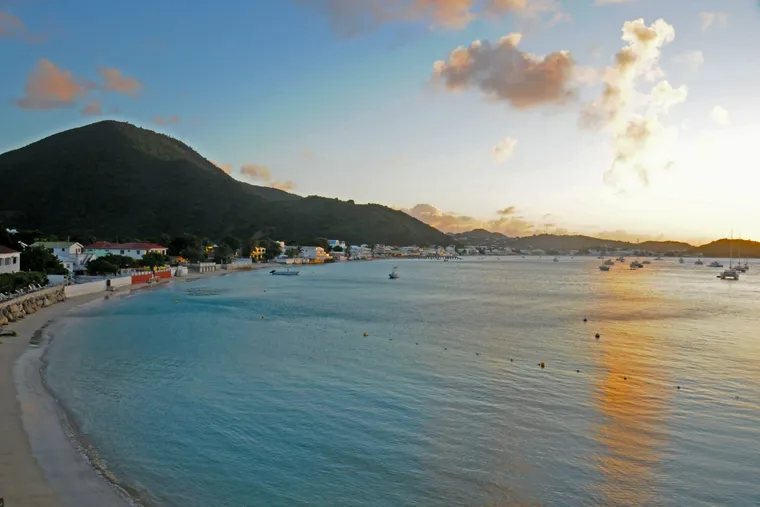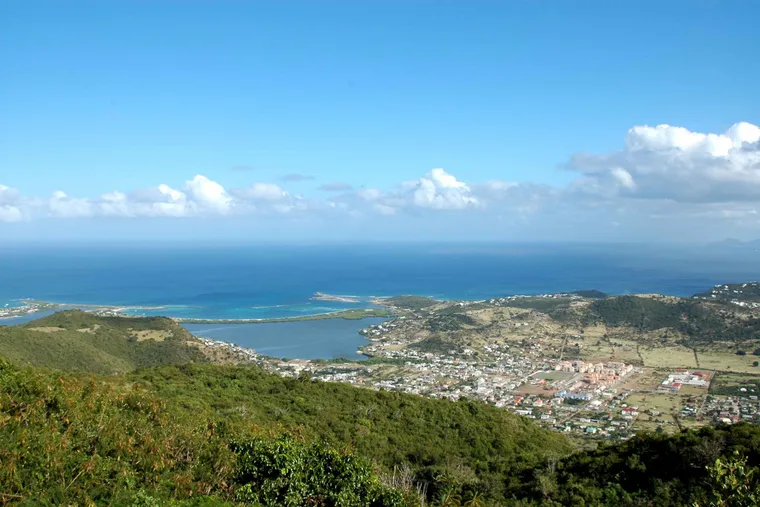
Saint-Martin is the smallest inhabited landmass in the world shared by two sovereign states: France to the north, the Kingdom of the Netherlands to the south. The split dates back to the 1648 Treaty of Concordia. For a visitor with a car, it mostly means two atmospheres to explore freely — in the same day if you like.
A border that isn’t one
No border post, no checkpoint, no customs. You pass from Saint-Martin (French) to Sint Maarten (Dutch) at a simple welcome monument (the obelisk near La Belle Créole, or the sign near Oyster Pond). Nothing physically marks the crossing, apart from an occasional change in road surface.
For your rental car: it crosses both ways with no formalities, no extra insurance, no declaration. You can pick it up on the French side and return it on the Dutch side if the company allows.
What actually changes
| French side | Dutch side | |
|---|---|---|
| Name | Saint-Martin | Sint Maarten |
| Status | French collectivity | Country within the Kingdom of the Netherlands |
| Main town | Marigot | Philipsburg |
| Area | ~53 km² (north) | ~34 km² (south) |
| Reference currency | Euro | US dollar |
| Everyday language | French, Creole, English | English, Dutch, Creole, Spanish |
| Airport | Grand-Case–Espérance (SFG), regional | Princess Juliana (SXM), international |
| Emergency number | 112 | 911 |
| Atmosphere | Villages, markets, food, wild beaches | Duty-free shopping, casinos, nightlife, cruises |
In practice, euros and dollars are accepted almost everywhere on the island, often at 1-for-1 in cash (rarely in your favour). The move: pay by card where you can, or in the posted currency. Carry a little of both in cash for beach shacks, parking and the lolos.
The French side in detail
More rural and food-focused. The highlights:
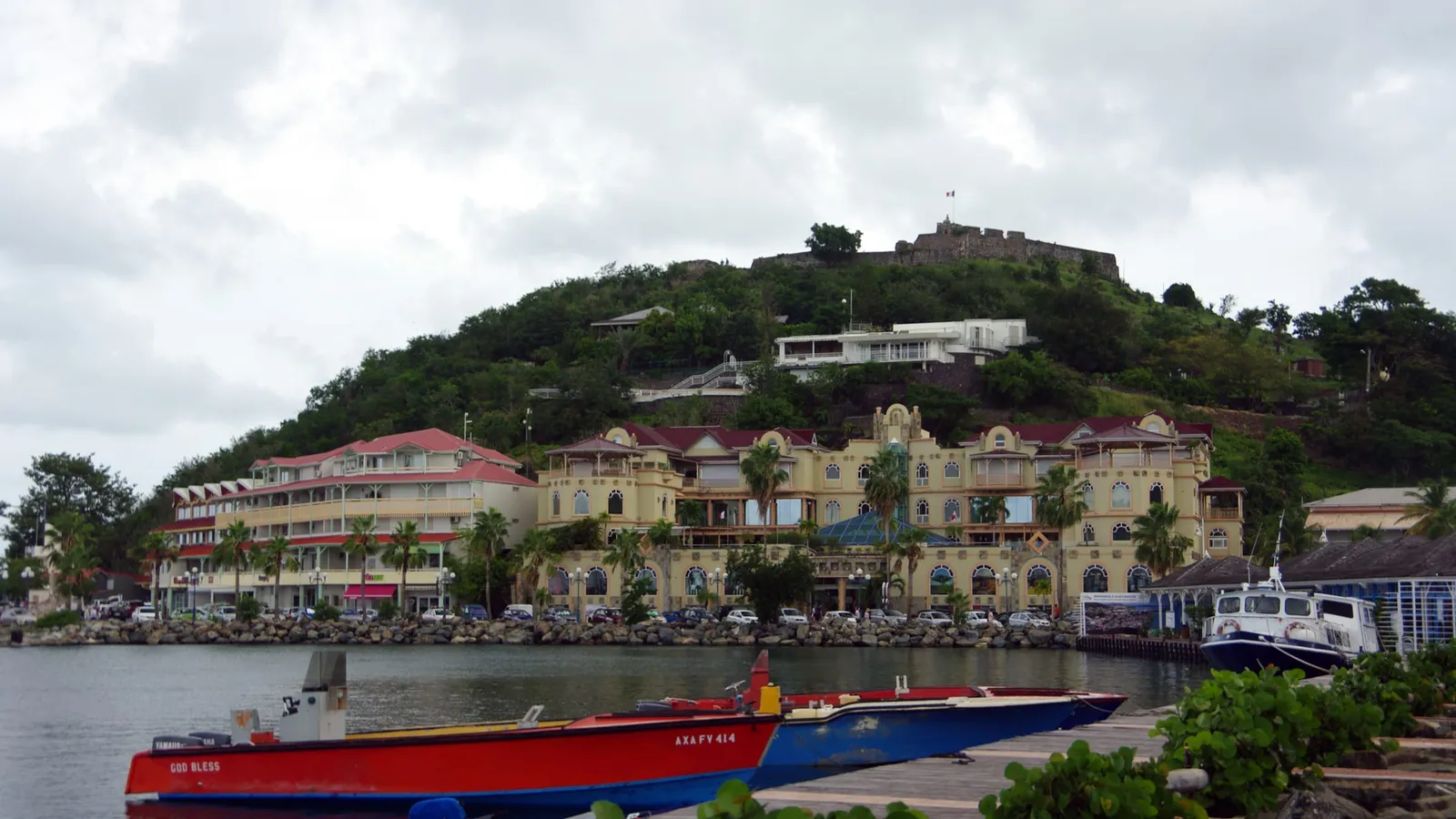
- Marigot: the seafront market (Tuesday and Saturday mornings), Fort Louis and its view, the Baie Nettlé marina;
- Grand Case: the island’s food capital, its restaurants and its lolos (Creole barbecue);
- the wilder beaches: Baie Rouge, Baie Longue, Happy Bay, Pinel Island, Grandes Cayes;
- Pic Paradis and the backcountry around Colombier and Loterie Farm.
It’s also home to the regional airport, handy if you’re arriving from Guadeloupe or Saint-Barth.
The Dutch side in detail
More urban, commercial and lively. The highlights:
- Philipsburg: Front Street and its duty-free shops, the Great Bay boardwalk, the cruise port;
- Simpson Bay: bars, restaurants, nightlife, the lagoon (one of the largest in the Caribbean) and its swing bridge;
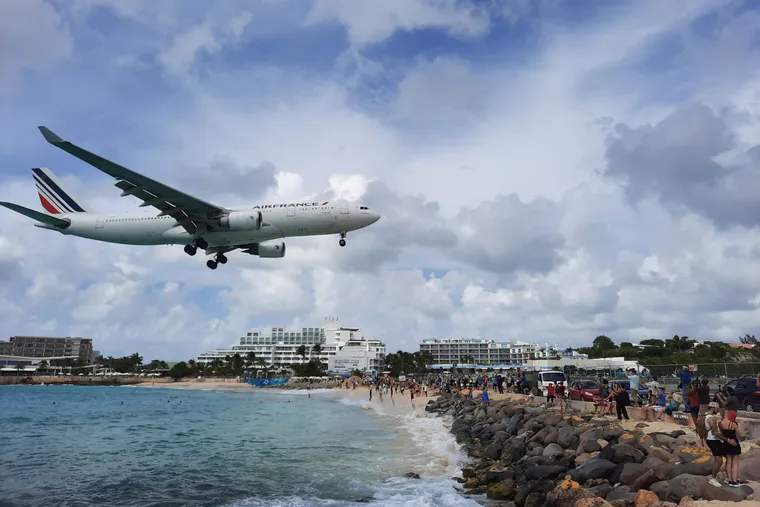
- Maho: the beach under the planes, next to the international airport;
- Mullet Bay: the finest beach in the south, white sand and clear water;
- the casinos, mostly clustered at Maho and Philipsburg.
Driving from one side to the other
Nothing special, just a few markers:
- more roundabouts on the Dutch side (Simpson Bay, Cole Bay, Union Road) — give way to traffic already on them;
- the Simpson Bay swing bridge, which stops traffic completely several times a day for boats;
- signage in French in the north, English in the south;
- speed limits in km/h everywhere, including the Dutch side;
- driving on the right on both sides.
Full details in Driving in Saint-Martin.
Entry formalities
The island is visited with a valid ID for EU citizens; other nationalities fall under French entry rules in the north and Dutch rules in the south (Schengen visa or exemption depending on your country). Since there’s no internal checkpoint, it’s your arrival airport that determines the formalities. If in doubt, check the rules for your nationality before you travel.
How to enjoy it
The good news: you don’t have to choose. Lunch in Grand Case and an evening in Philipsburg fit into the same day, and our one-day island tour deliberately runs through both sides.
If you do need to decide for your accommodation: the north for a nature-, beach- and food-focused stay; the south for nightlife, shopping and proximity to the international airport.
To plan your stay, the local island guide covers the essentials, and you can book your car in a few minutes.
All articles